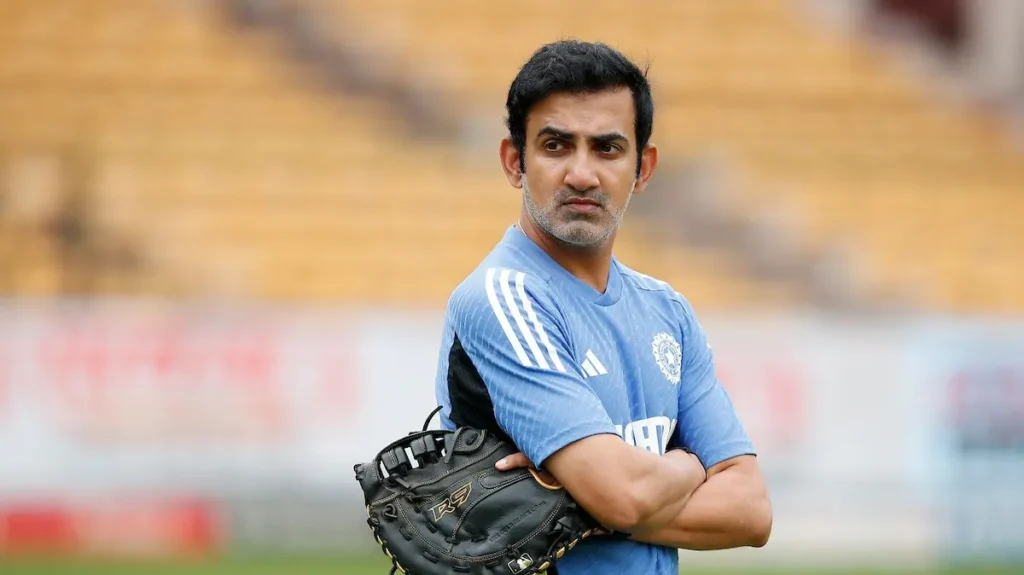
India men’s cricket team head coach Gautam Gambhir has expressed a clear preference for a single captain across all formats of the game. However, he also acknowledged that with the modern demands of international cricket and franchise leagues, such a system is no longer practical.
Speaking in an exclusive interview with CNN-News18, Gambhir reflected on the ideal leadership structure he would prefer as a coach. “Ideally, as a coach, if you ask me, it’s much easier to work with one guy — if you have one captain for all three formats,” Gambhir stated. “But it never happens because in today’s day and age, you can’t have a captain leading for 12 months in a year.”
India last had an all-format captain in Rohit Sharma until 2024, although he wasn’t actively leading the T20I side in 2023 due to his focus on the 50-over World Cup. Currently, Rohit continues as the ODI captain, Suryakumar Yadav leads in T20Is, and the Test captain’s role remains undecided, with strong speculation around Shubman Gill taking up the responsibility.
Gambhir highlighted the immense physical and mental toll a year-round leadership role can impose on any player. “You’re playing ten months of international cricket and then you’re playing two months of IPL. Imagine the pressure on a player who has to manage that consistently. It can take a toll on their mental well-being and overall game,” he explained.
While he emphasized the benefits of unified leadership in terms of vision and continuity, he also made a practical case for split captaincy. “In today’s cricketing structure, it’s better to have two captains. That way, the pressure is divided, and the players can play more freely when not burdened with leadership.”
India has experienced the pros and cons of both systems. Under Virat Kohli’s all-format captaincy — during his simultaneous stint with Royal Challengers Bengaluru (RCB) — consistency and a streamlined approach were touted as significant advantages. When Kohli stepped down from the T20I captaincy, the Board of Control for Cricket in India (BCCI) appointed Rohit as white-ball captain to ensure continued alignment in strategy. Eventually, Kohli relinquished Test captaincy as well, and Rohit assumed full control across formats.
Now, with India possibly heading into an unprecedented phase with three different captains — Rohit (ODI), Suryakumar (T20I), and potentially Shubman Gill (Test) — the team could face both fresh opportunities and new challenges in ensuring leadership consistency.
Gambhir’s insight offers a nuanced perspective on modern cricket’s evolving dynamics. While tradition may favor a single leader, the practicalities of today’s cricketing ecosystem suggest otherwise. The key, according to Gambhir, lies in balance — spreading responsibilities without losing the essence of team unity.